
Chicago Police Blotter Search
Chicago police blotter records cover arrests, crime reports, and calls for service from the largest city in Illinois. With over 2.7 million residents and more than 12,000 sworn officers, the Chicago Police Department generates one of the highest volumes of police blotter data in the country. You can search these records through the CPD's online tools, the city's open data portal, FOIA requests, or by contacting the records division at any district station. Chicago has invested heavily in making police blotter data accessible, and many records are available for free through public databases. This page walks you through every major way to find police blotter records in Chicago.
Chicago Quick Facts
Chicago Police Department Blotter
The Chicago Police Department is one of the largest police forces in the country. It operates 22 district stations across the city. Each district generates its own police blotter data based on the arrests, calls, and incidents that happen in that area. All of it feeds into the central CPD system. The department has a long track record of releasing police blotter data to the public, and Chicago has more online tools for searching this data than most cities in Illinois.
CPD divides the city into police districts, beats, and sectors. Each one has its own police blotter activity. If you know the district where an incident took place, you can narrow your search to that area. The department's online tools let you filter by location, date, and crime type. This is a big advantage when searching for police blotter records in a city this large. Without location filters, a search could return thousands of results.
The department also posts news releases and major arrest info on its website. These are not the same as the full police blotter, but they cover high-profile cases and give context on enforcement activity across Chicago.
Chicago Police Blotter Arrest Search
The Chicago Police arrest search tool is one of the best resources for finding police blotter records in the city. It lets you search by name and pull up arrest records from the CPD system. The tool shows the person's name, charges, booking date, and district of arrest. It is free to use and open to the public. You do not need to create an account or log in.
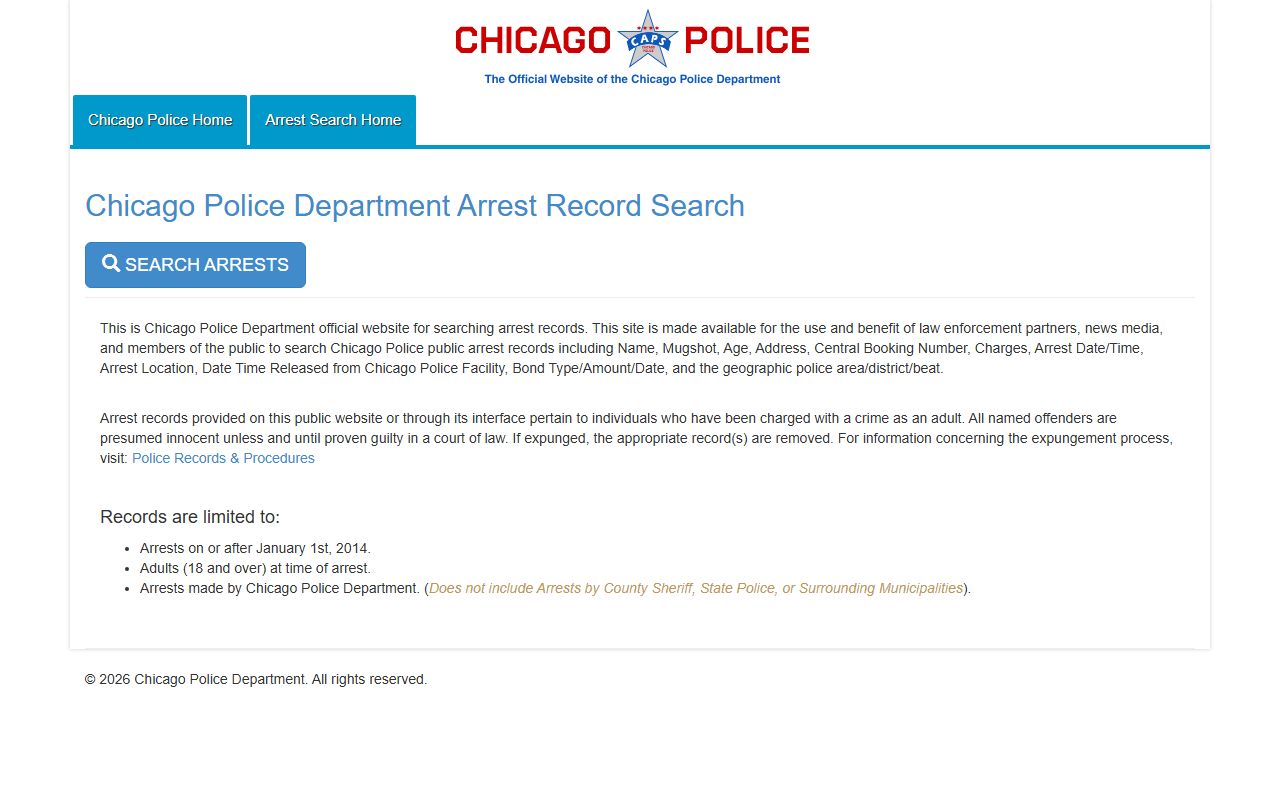
This tool is especially useful because it pulls from the active CPD database. You can look up recent arrests and see what charges were filed. For older records that are no longer in the live system, you may need to file a FOIA request with the department. But for anything recent, the arrest search tool is the fastest way to get police blotter data from Chicago.
Chicago Police Blotter Data Dashboards
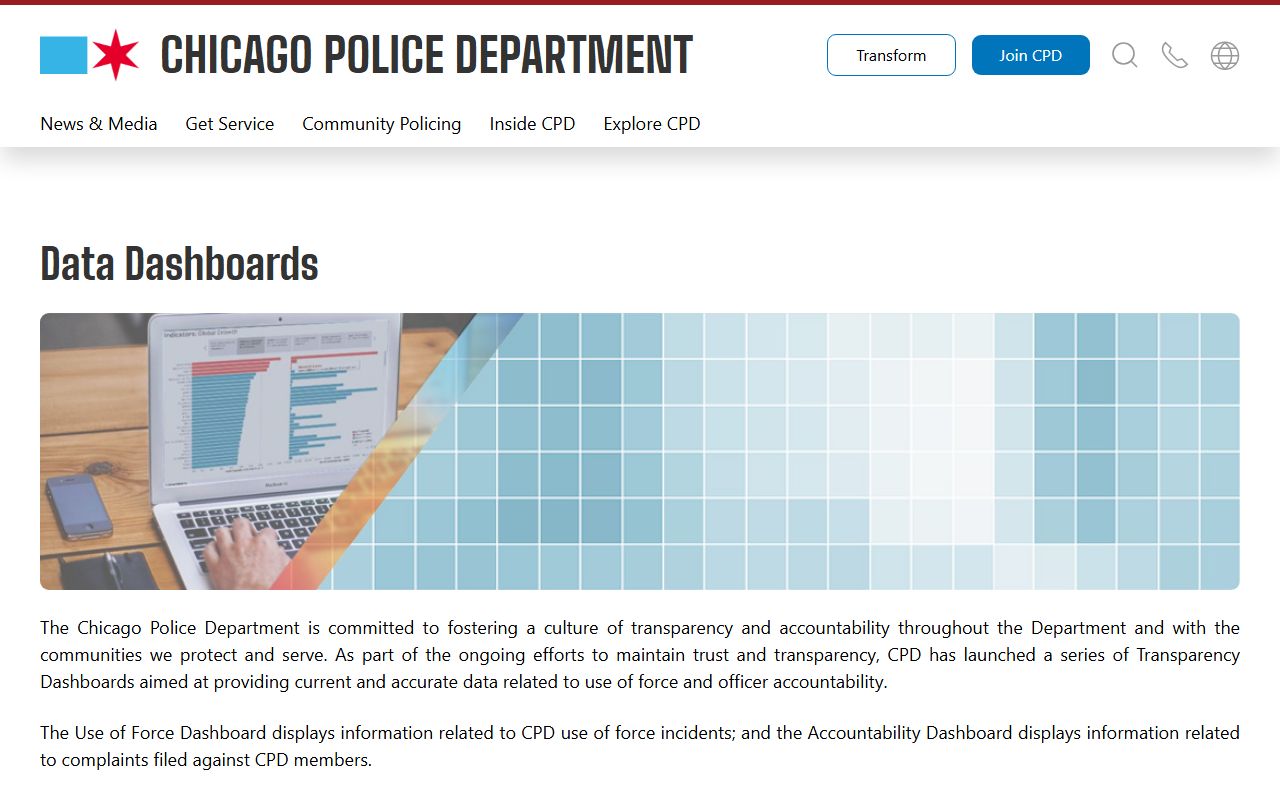
Chicago has some of the most transparent police data in the state. The CPD data dashboards show crime statistics, use of force data, and other metrics broken down by district and time period. These dashboards give a high-level view of police blotter activity across the city. You can see how many arrests happened in a given area, what types of crimes are most common, and how the numbers change over time.
The city also maintains a crimes map on its open data portal. This interactive tool lets you view reported crimes on a map of Chicago. You can zoom in to a specific block and see what has been reported there. It pulls data from CPD's records system and updates regularly. The map does not show individual names, but it gives a geographic picture of police blotter activity that is hard to match anywhere else in Illinois.
Note: The crimes map data may not include the most recent 7 to 14 days due to processing delays.
Chicago Police Blotter FOIA Requests
For police blotter records that are not available through online tools, you can file a FOIA request with the Chicago Police Department. The CPD has a dedicated FOIA page on its website. Under 5 ILCS 140, any person can request public records from a government agency in Illinois. Police blotter data is public. Write your request with as much detail as possible. Include names, dates, district numbers, and case numbers if you have them. CPD processes a high volume of FOIA requests, so being specific helps your request move faster.
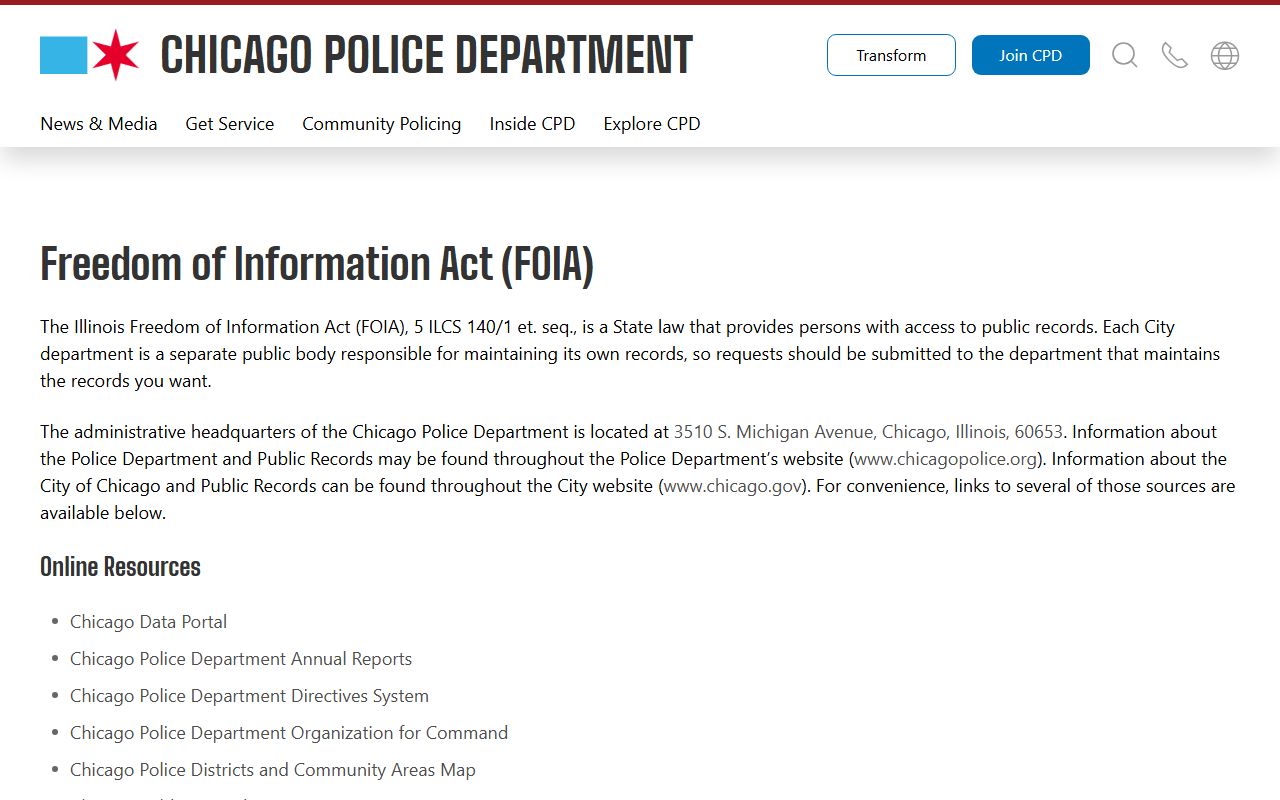
Under 5 ILCS 140/3, all government records are presumed open. Police blotter entries are among the least restricted types. CPD must respond within five business days, with a possible five-day extension. The first 50 pages of black and white copies are free. After that, 15 cents per page. CPD is one of the busiest FOIA-responding agencies in the state, so expect that some complex requests may take the full response window.
Chicago Police Blotter ClearMap Tool
CPD also runs the ClearMap tool, which is a GIS-based crime mapping system. It lets you look at police blotter activity by geographic area, date range, and crime type. ClearMap is more detailed than the basic crimes map on the city data portal. You can draw custom boundaries, filter by offense category, and export data for your own analysis.
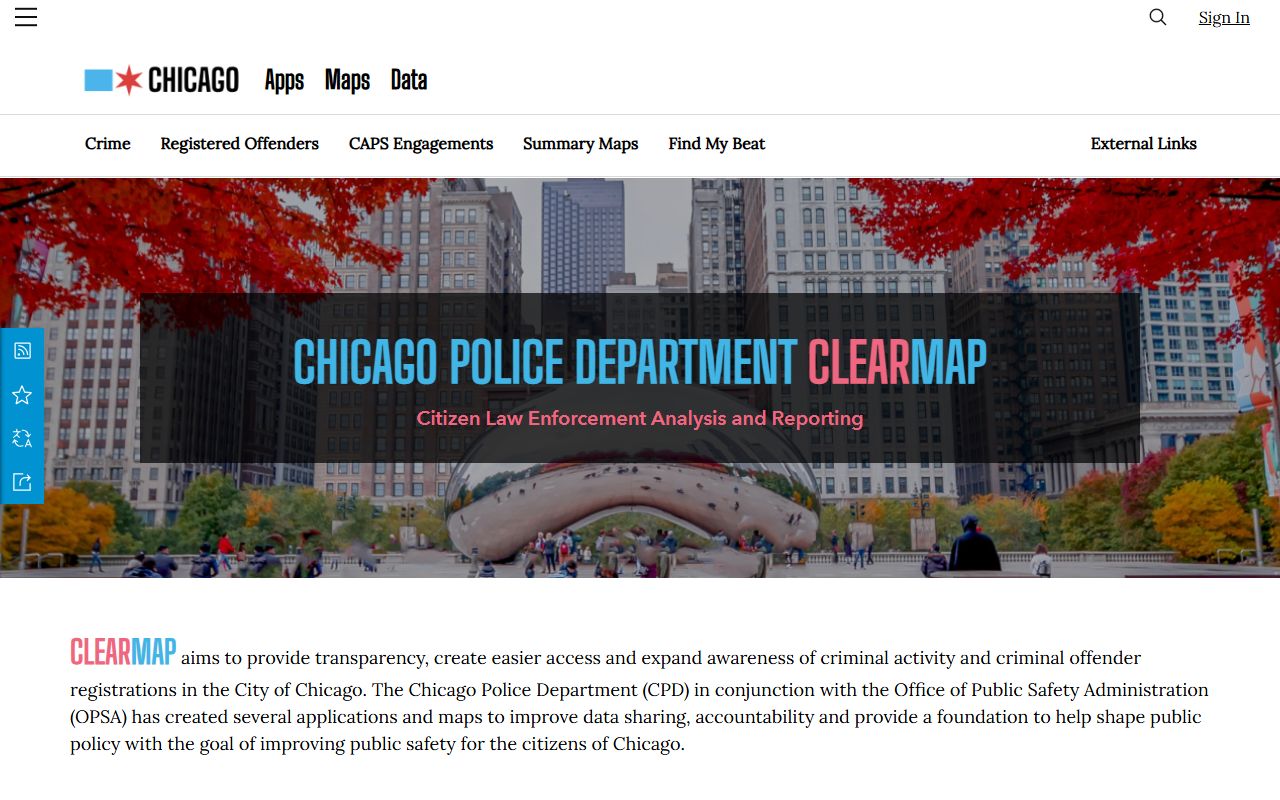
ClearMap is free and open to the public. It is used by researchers, journalists, community groups, and anyone who wants to understand police blotter patterns in their neighborhood. The tool shows the volume and type of crime in each area, which can help you decide whether to file a FOIA request for specific records or whether the summary data is enough for your needs.
Cook County and Chicago Police Records
Chicago sits in Cook County. The Cook County court system handles criminal cases that begin with a Chicago police blotter entry. When CPD makes an arrest and the state's attorney files charges, those court records go through the Circuit Court of Cook County. The county also operates the Cook County Jail, one of the largest single-site jails in the country. People booked on serious charges after a Chicago arrest are held there.
The police blotter record stays with CPD. The county holds court files, case dispositions, and jail records. To get the full picture on a Chicago arrest, check both the police department and the Cook County court system. Both are public. They hold different parts of the story. For the initial arrest and booking data, go to CPD. For what happened in court, go to the county. The Cook County inmate locator lets you search for anyone currently in custody at the jail.
Note: Cook County court records and CPD police blotter records are maintained by separate agencies and must be requested separately.
Police Blotter Exemptions in Chicago
5 ILCS 140/7 lists the exemptions that agencies can use to deny a FOIA request. CPD cites these exemptions more often than most departments simply because it handles more cases. Active investigations are the top reason for a denial. If releasing police blotter data could interfere with an ongoing investigation, CPD can hold the record back. Juvenile records are restricted. So are records sealed by court order. Certain sensitive records related to undercover operations may also be withheld.
For basic police blotter data, denials are not common. The name of the person arrested, the charges, the date, and the location are public in the vast majority of cases. If CPD denies your request and you think the denial is wrong, appeal to the Public Access Counselor at the Illinois Attorney General's office. The review process is free. The counselor can issue a binding opinion that compels CPD to release the records. Many contested FOIA denials from CPD end up with the counselor, and a good number of them result in the records being released.
What Chicago Police Blotter Entries Include
A Chicago police blotter entry covers one event. With a city this large, the volume of entries is massive. CPD logs thousands of events each day across its 22 districts. A typical Chicago police blotter entry includes:
- Date and time of the incident
- Location, beat, and district
- Type of crime or call
- Whether an arrest was made
- Name, age, and charges of the arrested person
- Case number and disposition
Not every entry is an arrest. Many are calls for service, traffic stops, or reports of crimes where no suspect was found. The sheer scale of the Chicago police blotter means that broad searches return a lot of data. Use filters for district, date, and crime type when you can. The online tools make this easier than filing a FOIA request for everything. For specific records tied to a known person or case, a FOIA request is still the most reliable method.
Nearby Cities
These cities border or are close to Chicago. Police blotter records for incidents near city limits may be handled by a suburban police department rather than CPD. Verify the exact address before searching.